Sales & Chatting
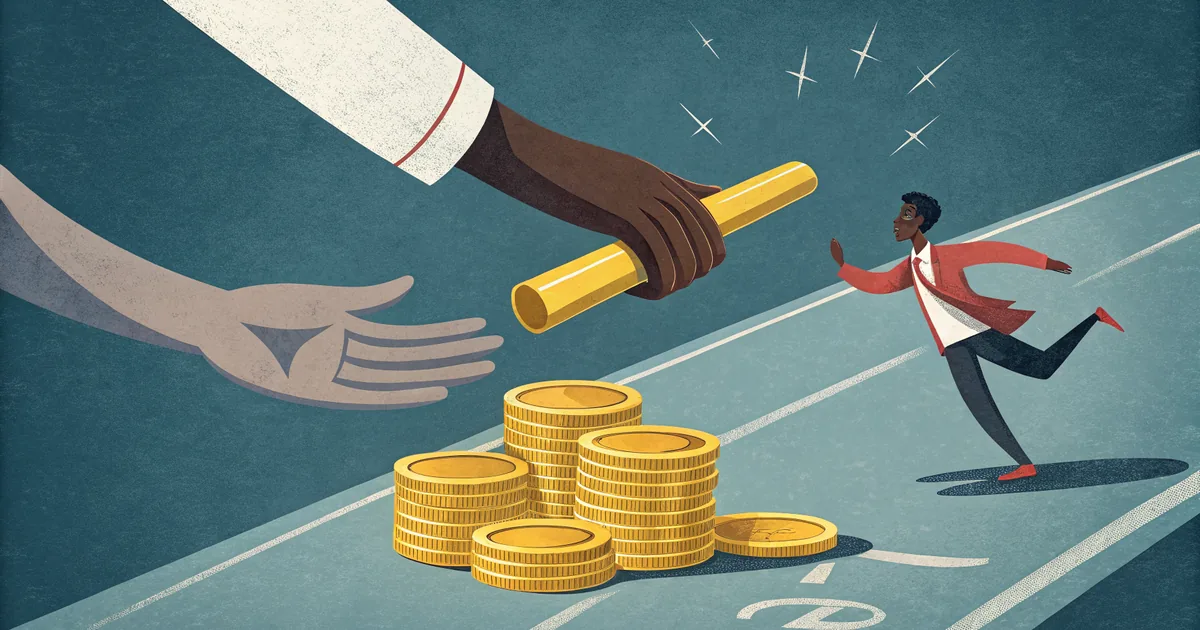
Chatter Shift Structure: Splits, Handoffs, Time Caps, and the Outcome-Independent Mindset That Prevents Revenue Collapse
Structure isn't a nice-to-have — it's the only thing standing between a $3K shift and a $300 one run by the same chatter on the same account.
Updated Jul 2026 · sourced from 14 YouTube creators and 7 operator groups
Key takeaways
- Two shorter shifts outperform one long one — chatter fatigue is real and measurable.
- A five-point handoff checklist (missed intent, pending PPV, angry fans, last mass DM, open whales) prevents invisible revenue leaks.
- Pre-announced daily revenue goals and public accountability consistently raise shift output.
- Outcome independence — executing correctly regardless of current results — is the one mindset that prevents emotional collapse mid-shift.
- Time caps per fan tier stop one big spender from devouring an entire shift's momentum.
A chatter hits $900 by hour three. She feels good.
She takes a long break. She finishes the shift at $1,050.
Meanwhile, the chatter who came in cold at hour four closes another $600. The first chatter had the momentum — and burned it on a lunch she didn't time.
This is the structural problem nobody talks about honestly. It isn't about scripts or split percentages.
It's about what happens inside a shift when there are no guardrails.
The Case Against the Marathon Shift
The conventional wisdom in parts of this industry is that longer is better. (Yalla Papi, Sep 2024) — chatters working up to 16 hours a day, voluntarily, because sales momentum compounds inside a single shift. That's real.
But it's also survivorship bias: it describes the outliers, not the median chatter at hour nine.
At least one operator group (active early-to-mid 2026) put it plainly: chatters fade after a few hours, and a fresh chatter sells far more. A second group, independently, flagged the same pattern — response times creeping past five to ten minutes as a shift drags on, and slow replies killing impulse purchases that account for roughly 30–40% of sales.
There's a structural fix hiding in plain sight. (Lachlan Nicholson, Sep 2025) Split chatting time across two sessions roughly twelve hours apart to capture fans in different time zones and to keep each session at peak cognitive sharpness. (Luca Pritchard, Dec 2024) recommends going further — three eight-hour shifts for 24-hour coverage. (Luca Pritchard, Sep 2025) breaks that into 10am–6pm, 6pm–2am, and 2am–10am, each with one manager overseeing four chatters.
That's an agency-scale model. But even a two-chatter operation benefits from the core principle: fresh beats long. (Oliver Smole, Dec 2025) makes the compression argument from the solo side — six focused hours generates more revenue than ten distracted ones.
The Handoff Checklist Nobody Has Written Down
The handoff is where revenue disappears quietly. A fan who told the morning chatter he gets home at 6pm gets a cold opener from the evening chatter who has no idea.
The relationship resets. The spend doesn't happen. (Patrick Mulroy, Mar 2024)
This is the minimum a chatter should hand off — and it should be text, not a four-minute voice note. Multiple operator groups in 2026 noted that long audio recaps slow the incoming chatter down; a thirty-second voice note is acceptable, a written summary is searchable.
The five-point handoff checklist:
- Missed intent — fans who signaled interest but didn't complete a purchase; what was pitched, what was declined, where the conversation stopped
- Pending PPV — unlocked content sitting unacknowledged; which fan, which price, how long since it was sent
- Angry or sensitive messages — any fan who expressed frustration, made a complaint, or went cold; the incoming chatter must not walk into a minefield blind (Markuss Hussle, Mar 2026)
- Last mass DM — what went out, when, to which list — so the incoming chatter doesn't double-send to fans currently in active conversations (Luca Pritchard, Apr 2026)
- Open whale situations — any high-spender mid-sequence; what the relationship temperature is, what was last discussed, what the plan is for the next touchpoint (Patrick Mulroy, Mar 2024) (Markuss Hussle, Mar 2026) formalizes this as a brief handoff call, not just a written note — outgoing chatter walks the incoming one through ongoing conversations, upset fans, and open deals before logging off. One operator group in early-to-mid 2026 added a practical requirement: tag each fan to the chatter who onboarded them, and ensure the new chatter reads the full CRM history before sending a single message.
Time Caps: The Counterintuitive Rule That Protects Revenue
Here's what almost nobody says out loud: your biggest spender can destroy your shift.
One operator group (mid-2026) made this explicit — set a time cap per fan so one big spender cannot eat a chatter's whole shift. Another group from the same period went further: cap whales at thirty minutes per session, because loyalty builds across many short interactions, not one marathon exchange.
This isn't about neglecting whales. (Patrick Mulroy, Mar 2024) is clear that consistency and relationship are the drivers of long-term whale revenue. It's about opportunity cost.
A chatter spending ninety minutes with a $500-spender is leaving the $200-spender, the three $50-spenders, and the re-engagement window with a lapsed sub all untouched. (Lachlan Nicholson, Apr 2025)
The structural fix: tiered time blocks by fan category, decided before the shift starts — not in the moment when the whale is being charming and the chatter is feeling the pull of the conversation.
Pre-Set Revenue Goals and Public Accountability
Without a number, a chatter drifts. (Yalla Papi, Nov 2024) (Yalla Papi, Oct 2024) is specific: set a dollar goal before the shift, announce it publicly to teammates. The public commitment is the mechanism — chatters who state a number out loud in a group are more likely to work at full intensity the entire shift. (Yalla Papi, Nov 2024) closes the loop: work the full planned shift no matter what.
On $0 or already at $1,000 two hours in, the answer is the same — keep going. Hitting a goal early and coasting wastes the momentum that makes record shifts possible. (Yalla Papi, Sep 2024) adds the measurement layer: a daily sales tracker causes chatters to sell more simply through consistent self-comparison.
Track fans chatted, sales made, and daily revenue as separate metrics. Each one improves independently when it's being watched.
Some operator groups in 2026 structured this more formally — bonus tiers spaced every $250 so a chatter is never more than a small sale away from the next milestone. (Yalla Papi, Sep 2024) Wide gaps between bonus tiers demotivate; narrow gaps keep the incentive within reach at all times.
Daily Missions: What the First Fifteen Minutes Should Look Like
The first sale of a shift is not just revenue. It's the emotional foundation for everything that follows. (Yalla Papi, Sep 2024)
A slow start stacks negative momentum and suppresses total revenue for the entire shift. An early win compounds.
This is why the first fifteen minutes of a shift should have a concrete mission — not "chat with fans" but "make one sale before anything else."
For the incoming chatter, that mission starts with the handoff checklist above, then moves to: priority-tag whales first, check pending PPVs, scan for anyone who responded overnight to a mass DM. Multiple operator groups from early 2026 codified this sequence: check missed intent, pending PPV, angry messages, and last mass DM — in that order — before a single new conversation is opened.
From there: (Yalla Papi, Sep 2024) re-engage old subscribers every single day, not just new ones. An account with 500 subscribers that did $62 in a shift still has hundreds of uncontacted fans.
The Outcome-Independent Mindset: Why Emotional States Destroy Structured Shifts
This is the part operators talk about the least and that costs the most. (Yalla Papi, Nov 2024) frames it with unusual precision: chatters must execute the correct actions every shift regardless of how they feel or what results they are getting. The right process over time produces better long-run results even when any single day can yield a good result from bad behavior, or a bad result from good behavior.
That last clause is important. Operators who don't understand it misread their own data constantly — attributing a good shift to whatever they happened to do differently, attributing a bad shift to the account or the fans. (Yalla Papi, Nov 2024) calls the alternative by its name: emotion-driven decisions.
Taking it easy when ahead. Quitting mentally when behind.
Both destroy performance. The discipline required is the same as committing to something uncomfortable before you feel like doing it — the action comes before the feeling, not after. (Yalla Papi, Nov 2024) quantifies what this mindset has to survive: conversion rates as low as 5%, meaning a chatter may talk to forty fans and see zero sales before a buying run begins.
Without pre-set rules and routines, discouragement causes chatters to abandon the correct process mid-shift. With them, the dry spell is just part of the math. (Yalla Papi, Nov 2024) describes the binary outcome: a chatter either catches the momentum of consecutive sales and finishes energized, or spirals into frustration and missed sales.
There is no stable middle ground without structure holding the floor. (Yalla Papi, Nov 2024) takes this a step further — chatters must cultivate a genuine belief that they enjoy the work, even if they have to consciously reframe their mindset. The framing is blunt: lie to yourself and have a great shift, or stay "honest" about hating it and have a miserable, low-revenue one.
Whether you find that philosophy appealing or not, the underlying mechanism is real: belief in the job is a prerequisite for peak performance.
Where Operators Disagree: Shift Length and Chatter Pay
Not everyone agrees on the split-shift model. (Yalla Papi, Sep 2024) represents a competing view — that momentum compounds within a single long shift, and top chatters voluntarily work until they physically cannot continue. This is directly in tension with the operator group consensus that fatigue degrades performance after a few hours and that a fresh chatter outperforms a tired one.
Both positions have partial evidence behind them. The honest read: for elite, self-driven chatters who are genuinely in flow, longer shifts may compound. For the median hired chatter — especially on commission — the quality degradation past hour six is real and measurable in revenue-per-conversation metrics.
On pay structure, the disagreement is sharper. Vetted data puts the range wide: (Hunter Ezra OFM, Apr 2025) describes a $3M/month operation paying chatters 15% of tips and messages only — and another operator paying 70% of gross revenue (a "profit-destroying mistake").
Anonymous operator groups from 2026 put the working range at 5–25% of net, with the most common figure around 20% of net earnings. At least two separate groups agreed: never calculate commission on gross — always net after OnlyFans' cut.
One group advocated for a 7-day retained-spend bonus structure rather than straight sales commission, to cut short-term spam behavior. This conflicts with the straight-commission model most operations run.
The retained-spend approach is a single-group data point as of mid-2026 — interesting, not confirmed.
The Practical Bottom Line
The shift is the product. Everything else — the scripts, the CRM, the content vault — exists to support what happens inside those hours.
And what happens inside those hours is determined almost entirely by structure applied before the chatter logs in.
Two shorter shifts with a proper handoff beat one long one. The handoff checklist is five items and takes three minutes to complete.
Time caps per fan tier are set before the shift, not negotiated mid-conversation. Revenue goals are announced, not assumed.
And the mindset — executing correctly regardless of how the first two hours felt — is not a personality trait. It's a trained behavior. (Yalla Papi, Sep 2024) puts the stakes plainly: chatters are responsible for roughly 80% of results.
Models and traffic can each be acquired for around $500/month. Quality chatters cannot be purchased.
They're built — shift by shift, handoff by handoff, with structure that doesn't bend when the momentum goes cold.
Sources
On the record (YouTube creators):
- Yalla Papi — 5 reasons OnlyFans chatters need IRON CLAD discipline to survive, Nov 2024. Watch ↗
- Patrick Mulroy — How To Sell Content On OnlyFans In 2024, Mar 2024. Watch ↗
- Yalla Papi — The 5 most harmful mindsets that prevent OnlyFans chatters from making the big money, Nov 2024. Watch ↗
- Yalla Papi — 5 key differences between good OnlyFans chatters and shitty OnlyFans chatters, Sep 2024. Watch ↗
- Yalla Papi — 6 Non negotiable rules I have for my OnlyFans chatters, Sep 2024. Watch ↗
- Lachlan Nicholson — 5 Chatting Strategies to INSTANTLY Boost Your OnlyFans Sales, Apr 2025. Watch ↗
- Hunter Ezra OFM — How I Built a $10M OFM Agency (Full Breakdown), Apr 2025. Watch ↗
- Yalla Papi — 9 Simple changes to double your OnlyFans chatting revenue in your next shift, Oct 2024. Watch ↗
- Oliver Smole — How I Would START An OFM Agency In 30 Days If I Did It Again, Dec 2025. Watch ↗
- Luca Pritchard — How to Make Your First $10,000/mo with OFM | Step-by-Step Guide, Dec 2024. Watch ↗
- Lachlan Nicholson — 5 Chatting Mistakes OnlyFans Creators Make (And How To Fix Them), Sep 2025. Watch ↗
- Luca Pritchard — The Secret Team Structure That Lets My Onlyfans Agency Run Itself, Sep 2025. Watch ↗
- Luca Pritchard — Why Most OF Agencies NEVER Scale Past $100K/Month, Apr 2026. Watch ↗
- Markuss Hussle — This ONE Bottleneck Is Killing Your Agency (Fix This Today) | OnlyFans Management, Mar 2026. Watch ↗
- Yalla Papi — 5 specific actions I am taking in September to hit $100k in my OnlyFans agency, Sep 2024. Watch ↗
- Yalla Papi — The 7 Core Tenets of the OnlyFans Chatter Marines, Sep 2024. Watch ↗
- Yalla Papi — How I scaled my OnlyFans agency from $0 - $110,000 in two months, bet u think i'm cool now, Sep 2024. Watch ↗
Community intelligence: 128 operator claims aggregated from 7 separate private OFM groups (Dec 2025–Jun 2026), corroboration counted across groups. Group identities are withheld to protect sources; browse the underlying intel in the Community Intel Wiki.