Other
Device Fingerprinting Deep Dive: What Gets You Banned That a Factory Reset Won't Fix
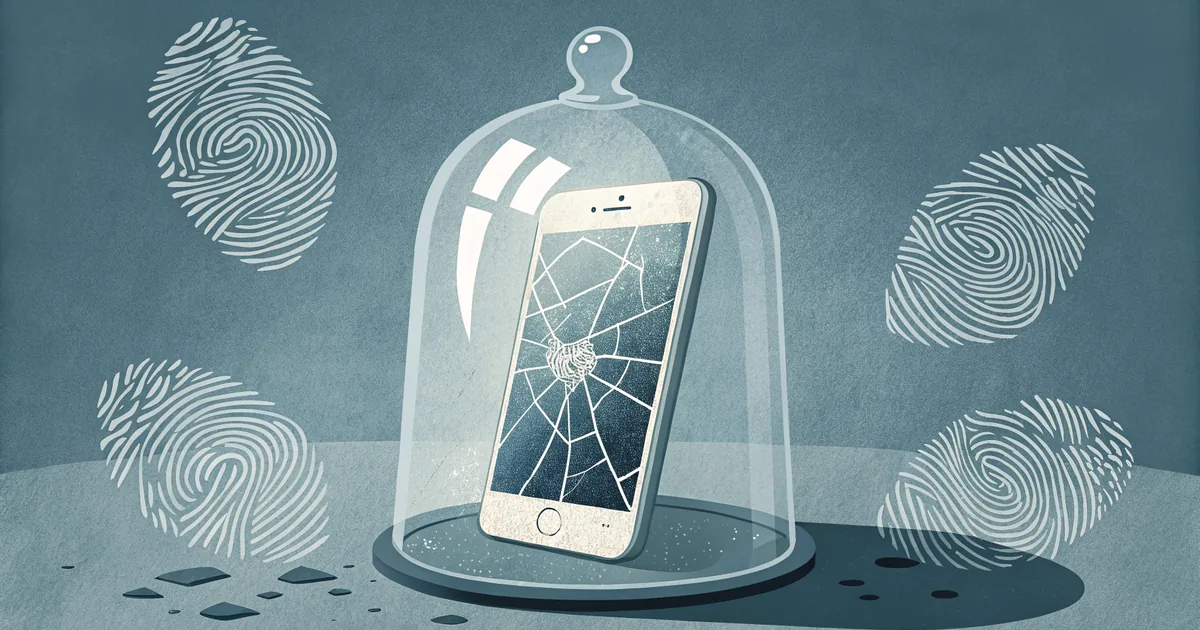
A factory reset feels like a clean slate. It isn't — and platforms have been counting on you not knowing that.
Updated Jun 2026 · sourced from 18 YouTube creators and 6 operator groups
Key takeaways
- Hardware UUIDs persist through factory resets; only hardware swaps or verified spoofing tools fix this.
- Hinge's late shadowban is fingerprint-driven — wrong device metrics cause near-100% shadowban rate.
- Crane app cloner is flagged by Bumble; a fresh phone plus US SIM is the only safe path.
- Android cloning detection is real and actively exploited; iOS jailbreak routes in 2026 have serious limits.
- Spoofzy is the community's most-cited spoof solution, but operator consensus on its reliability is split.
You paid $1,600 to get an account unbanned. It came back live.
Forty-eight hours later — banned again, same flag, same device.
That's not bad luck. That's a hardware UUID that never moved.
The Thing Platforms Know That You Don't
Every Android device carries a hardware UUID — a persistent identifier baked into the chipset, not the OS.
Factory reset wipes your apps, your cache, your dignity. It does not touch the UUID.
This is confirmed from multiple distinct operator groups (early-to-mid 2026): "Device fingerprint is tied to hardware UUID; factory reset does NOT change it, only hardware does." The same groups are explicit that once an Android is banned on a platform, it stays flagged for permanent bans unless you actively spoof it.
That's the core problem. Everything else downstream — app cloners, containers, profile transfers — is a workaround built on top of an unfixed foundation.
Hinge's Fingerprint Trap Is Different From the Others
Most fingerprint bans are hard and fast. Hinge's is slower and arguably more damaging.
Operators in multiple groups (early 2026) flag a specific pattern: Hinge delivers late shadowbans tied to device fingerprint metrics. The key word is wrong.
Running outdated or inconsistent device metrics — the kind that come off a poorly configured emulator or an aging cloned environment — produces near-100% shadowban rates, not immediate bans.
You're not kicked out. You're just invisible.
Matches dry up. Conversations go nowhere.
You burn chatting resources on accounts that were dead before the first message sent.
The practical implication: for Hinge specifically, a plausible, current device fingerprint matters more than whether the account itself is "clean." (Hunter Ezra OFM, Feb 2026)
Bumble Knows You're Using Crane
Crane is the popular Android app-cloning tool. It's also flagged.
One operator group (early 2026) is unambiguous: Crane gets detected by Bumble. Their recommended alternative is blunt — a new physical phone plus a US SIM card per account.
No shortcuts.
This tracks with the broader picture. (Hunter Ezra OFM, Feb 2026) Bumble has been sued for the volume of device-level data it collects — this isn't speculation about aggressive fingerprinting, it's on the public record.
The platform doesn't just check your IP or your login cookie. It's pulling hardware-level signals, and Crane doesn't fool those signals reliably anymore.
Bumble also throttles unverified accounts after 20–30 matches, per operator observation (early-to-mid 2026). The correct path: use the native device app (not browser), let successful accounts age, and expect attrition. (Patryk, Mar 2026) notes that Bumble is currently less aggressively patched than Tinder, but "less patched" and "easy to scale" are very different claims.
Self-Signed Containers: Weak Bases
Self-signed app containers — think sideloaded IPAs on iOS or unsigned APKs — get sold as clean environments. They're not.
The fingerprint problem doesn't live in the app signature. It lives in the hardware layer the app reports back to the platform.
A self-signed container running on a previously-flagged device is still running on a previously-flagged device.
Think of it like painting your car after a traffic violation. The plate number hasn't changed.
Operators note (late 2025–early 2026) that even accounts with 24+ hours of post-creation warmup can carry shadowbans through transfers — Snapchat's survival rate after transfer sits around 5–10 accounts out of every 50 created. Self-signed containers do not fix the underlying signal that causes that attrition.
Android Cloning Detection: How Broad Is It?
Beyond Bumble and Crane, how widely is cloning detection deployed?
The evidence suggests it's broad and getting broader. (habibi, Sep 2024) Automated dating-app workflows on iOS were noted (as of late 2024) to produce the highest trust ratings, with explicit advice to avoid older iPhone models.
The logic: platforms score device trust partly based on hardware recency and consistency.
On Android, operators across multiple groups (late 2025–mid 2026) describe a consistent failure pattern: cloned environments get flagged at the account-creation layer, during the warmup phase, and again at the "transfer" stage when accounts are moved into chatting pipelines.
Geelark — a cloud Android environment — shows ~10% success rates on Tinder with shadowbans shortly after creation, per operator reports (late 2025). That's not a tool failure.
That's platform-level detection of virtualized device environments.
iOS Jailbreaking in 2026: What's Actually Viable
The iOS jailbreak path has historically offered more flexibility — deeper access to spoof device identifiers, run unsigned code, and manage multiple accounts from a single device.
In practice, in 2026, the picture is more constrained. (habibi, Sep 2024) The recommended iOS workflow for dating-app automation requires iPhone X, 11, or newer — Facebook login for account creation, App Cleaner for transfer, then Ominimeter for running accounts.
No jailbreak mentioned. That's notable: the community's most-cited iOS workflow deliberately avoids jailbreaking. (habibi, Jan 2025)
Similarly, running Threads at scale on iOS relies on multiple physical iPhones on separate SIM cards — explicitly no jailbreaking, no VPNs, no proxies.
The pattern is consistent: practitioners who've tested both paths are increasingly preferring more physical hardware, less software trickery. Jailbreak-based approaches introduce instability and new detection vectors that physical device separation avoids.
This doesn't mean jailbreaking is useless. It means the realistic ceiling is lower than vendors selling iOS spoofing solutions typically admit.
Spoofzy: The Community's Recommended Tool — With Caveats
When operators discuss Android device spoofing, Spoofzy comes up most frequently as a recommended solution for the hardware UUID problem (early-to-mid 2026).
The claim: a device once permanently banned on Android can be re-used if properly spoofed via Spoofzy.
Here's where the evidence gets honest: this recommendation comes from operator chatter, not vetted public sources. It could reflect genuine operator experience, a vendor's coordinated seeding, or both.
We can't verify Spoofzy's actual detection-evasion rate from available evidence.
What we can say is that it's the most-cited specific tool for this problem across groups observed in this period. That's corroboration of the recommendation, not corroboration of the outcome.
Treat it as a lead to test, not a confirmed solution.
Where Operators Actually Disagree
The fingerprinting space is full of conflicting operator signals. Here are the live fault lines:
Factory reset: fix or not? One group (early 2026) states clearly that factory reset does NOT change hardware UUID and only hardware replacement works. A separate group (also early 2026) recommends factory-resetting Android before reusing to avoid bans — implying reset has some protective value.
These positions are not reconcilable without knowing which platforms each group was targeting. The UUID claim is likely correct at the hardware layer; factory reset may still clear some software-layer flags that contribute to bans even if the UUID persists.
Both things can be partially true.
Tinder stability: One group (mid 2026) reports Tinder is now stable with no late shadowbans if you use a quality API and avoid weak panels. Another group (early 2026) reports accounts dying 1–3 hours after export during AI chatting due to late shadowban — and attributes it to fingerprint detection, not API issues. These reports overlap in time. Either the quality of the API/device setup is doing heavy lifting, or the platform's behavior is genuinely inconsistent across account cohorts.
FaceTec bypass: One group states flatly that FaceTec face-check verification cannot be bypassed, and that the 80,000+ "device fingerprint tweak" sellers on certain marketplaces are scams. No group in the observed set claims to have successfully bypassed FaceTec. That's rare agreement in a space full of disagreement — and worth weighting accordingly.
The $100 Red Flag and the Hardware Cost Reality
Operators across multiple groups (early-to-mid 2026) flag a consistent scam pattern: services offering warmed accounts plus full marketing management for ~$100. Legitimate infrastructure costs more.
Full stop.
Here's what the hardware reality actually looks like at scale:
- (Yalla Papi, May 2026) Samsung S8 phones running 24/7 in warm environments see ~75% battery expansion within months, splitting cases.
- (Yalla Papi, May 2026) A Samsung S21 ran with zero reliability issues; 5G capability may affect IP reputation scoring by platforms.
- (Yalla Papi, May 2026) Running a mobile proxy farm is operationally demanding — daily resets, cancellation handling, hardware failures — and that labor cost eats into margins.
The cheapest viable path is a 5G-capable Android at minimum spec, per operator experience. (Yalla Papi, May 2026) "Better proxies" from 5G devices may also carry higher trust scores on platforms — though that claim comes from a single observed data point, not broad corroboration.
The Practical Bottom Line
Here's what the evidence actually supports:
What's confirmed: - Hardware UUIDs survive factory resets. If a device is banned, a reset is not a fix. - Crane is flagged by Bumble. New physical hardware is the only reliable alternative. - Hinge's fingerprint detection operates as a late shadowban, not an immediate kill — wrong device metrics are the trigger. - FaceTec bypass vendors are, by consensus across the observed operator community, scammers. - iOS jailbreaking in 2026 is less central to practitioner workflows than physical device separation.
What's plausible but unverified: - Spoofzy addresses the hardware UUID problem on Android. Test before scaling. - 5G devices carry better trust signals on platforms than 4G equivalents. (Yalla Papi, May 2026) - Factory reset clears some software-layer flags even if UUID persists — the two conflicting operator positions may both be partially correct.
The operational rule that survives all of this:
Every dollar you spend on account warmup, aged profiles, or sophisticated chatting infrastructure is wasted if it runs on a device the platform already has a fingerprint for.
Fix the foundation first. Everything else is decoration.
Sources
On the record (YouTube creators):
- Yalla Papi — The Glorious Rise And Fall Of My $100k Mobile Proxy Business, May 2026. Watch ↗
- habibi — Onlyfans management Ask me anything (leaked call), Sep 2024. Watch ↗
- habibi — Onlyfans THREADS Strategy OCT 2025**, Jan 2025. Watch ↗
- Hunter Ezra OFM — ofm marketing tier list, Feb 2026. Watch ↗
- Patryk — OFM Marketing Tier List (2026), Mar 2026. Watch ↗
Community intelligence: 35 operator claims aggregated from 6 separate private OFM groups (Dec 2025–Jun 2026), corroboration counted across groups. Group identities are withheld to protect sources; browse the underlying intel in the Community Intel Wiki.