Sales & Chatting
Script Architecture for Scale: Lock the Opener, Objection Handler, and Close — Then Leave Room for the Human Stuff
Most agencies either over-script their chatters into robots or leave them winging it — here's the architecture that actually scales.
Updated Jun 2026 · sourced from 17 YouTube creators and 7 operator groups
Key takeaways
- Lock the opener, objection handler, and close; leave 10–15% flex for personality and fan-specific detail.
- A single proven script, run consistently, can drive $30k+/month — simplicity beats variety.
- A/B test on 20–30% of non-whale fans; never test new scripts on your top spenders first.
- Compliance enforcement is about tracking scripted vs. cowboy shifts on close rate, not policing every line.
- Fan psychology — not just script copy — determines whether a whale stays or churns.
A chatter at a mid-tier agency spent an entire shift going off-script — winging openers, skipping objection handlers, improvising closes. Revenue that day: near zero.
The chat manager pulled the logs, ran the scripted version on the same fan segment the next day, and conversion jumped. One operator group (reporting in early 2026) put it bluntly: one good opener alone boosted conversion 35%.
Scripts are underrated for scaling.
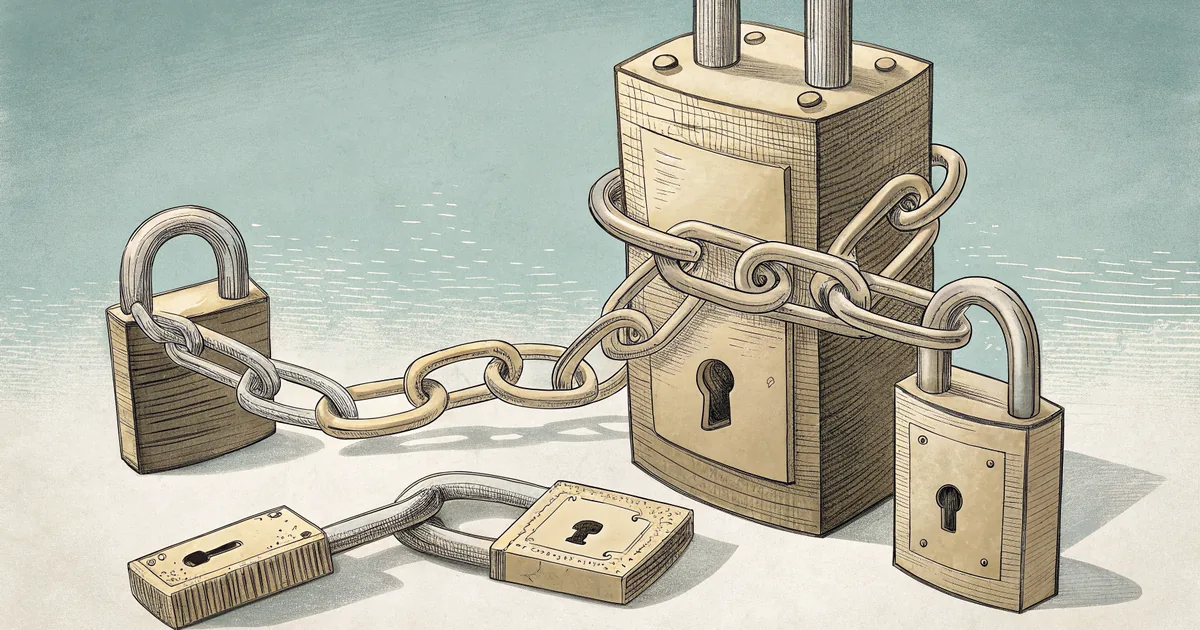
The problem isn't that operators don't have scripts. It's that nobody agrees on what to lock and what to leave loose — and both extremes cost money.
Why the Lock-vs-Flex Tension Is Real
Over-scripted chatters read like bots. Fans have gotten sharper; chatter detectability is at an all-time high, actively undermining conversion rates (TDM Business (OFM), Dec 2025).
A perfectly templated opener that lands the same way in 10,000 inboxes is a perfectly detectable opener.
But pure improvisation doesn't scale. If you're running 24-hour shifts across multiple accounts (Luca Pritchard, Sep 2025), a chatter at 2 a.m. making judgment calls on objection handling is a liability, not an asset.
The answer isn't a compromise — it's an architecture.
The Three Parts You Lock
1. The opener structure. Not the exact words — the structure. A rotating set of 3–4 templates, each with a slot for one personal detail, is what multiple operator groups independently recommended across early-to-mid 2026. The template ensures the conversation starts correctly; the personal detail prevents the pattern from being obvious.
The specific mechanics matter here. Ban generic openers like "how are you?" and "what are you up to?" outright (Lachlan Nicholson, Oct 2025).
Replace them with something that has texture — a short, mundane but relatable daily anecdote that can be AI-generated and reused across all fans in a shift (Lachlan Nicholson, Oct 2025). The example is specific: getting your nails done, cracking one, ending up with two different colors.
It's forgettable in real life and memorable in an inbox.
Multiple messages, not one block. Short sequential messages create the feel of a live conversation; long copy-pasted blocks are instantly recognizable as scripted (Lachlan Nicholson, Nov 2025).
2. The objection handler. This is the highest-leverage locked component in the entire script. Get it wrong and a fan who would have bought doesn't. Get it right and you're reportedly converting 8 out of 10 hesitators (Bjorn Olsen, Jan 2026).
The mechanics of a structured PPV objection framework: wait 3 minutes after seen, send the fan's name with a question mark, two follow-ups every 2 minutes, then reduce pressure, then surface the actual objection — is it value, content-fit, or trust? (Lachlan Nicholson, Feb 2026) Don't mention the PPV again the moment they respond; run two neutral conversation lines first.
The bluntest version of the objection handler is deliberate silence (Bjorn Olsen, Feb 2026). No reply to hesitation applies pressure without giving the fan anything to argue against.
One creator reports this as the single highest-converting objection technique in their arsenal (Bjorn Olsen, Jan 2026).
For card-decline excuses, the script is empathy: "That's so annoying — did the bank say when it'll be fixed? I hate that for you." (Lachlan Nicholson, Oct 2025)
Visible energy drops after a rejection are conversion killers.
3. The close. The close gets locked word-for-word, not structurally. One agency's best chatter uses a single proven custom close line consistently: "Can't believe I'm going to do this. It's a tip $400 and it's on" — framed as a spontaneous, reluctant decision (Lachlan Nicholson, Apr 2026). The framing of reluctance is the mechanism.
For the first upsell in a new-subscriber flow, one creator found $34.99 outperformed both lower and higher price points in testing (Bjorn Olsen, Jan 2026). That's a locked number, not a judgment call.
Follow up on a purchase within 5–10 seconds, before the subscriber has even watched what they just unlocked (Lachlan Nicholson, Apr 2026). Speed at the close is a locked rule, not a suggestion.
The 10–15% You Leave Flexible
At least one operator group active in early 2026 landed on a specific ratio: lock the opener, objection handling, and close; leave 10–15% room for personalization and filler lines in the model's voice.
What goes in that 15%? The personal callbacks.
The fan's name — used specifically, not "babe" (habibi, Mar 2025). The hobby reference from chatter notes.
The inside joke built from a previous conversation (Lachlan Nicholson, Nov 2025). The time-zone-aware re-engagement line (Lachlan Nicholson, Oct 2025).
The goodwill scale explains why this matters structurally: the amount chatters ask for (money) must be matched by what they give (personalized interaction, life details, occasional free content) (Lachlan Nicholson, Apr 2026). The locked script extracts.
The flexible 15% replenishes.
One critical note: give chatters concrete example phrases the creator would and wouldn't say. Abstract tone notes don't survive a busy shift.
Concrete phrasing does — this was flagged across multiple operator groups in 2025–2026.
The A/B Testing Protocol
Here's what the evidence actually supports:
- Test new scripts on 20–30% of fans; if the account has weak baseline engagement, drop that to 10–15%. Never test on top spenders first. Multiple operator groups in 2026 converged on this independently.
- Some groups enforce a 3-day mandatory A/B test and pay bonuses only on scripted compliance plus revenue — chatters who deviate don't qualify for the bonus, and repeat offenders get replaced.
- Track conversion per chatter, not overall. One strong closer can mask a weak script — or a weak team can hide a strong one. Per-chatter metrics expose which.
- Normal charged/responded conversion benchmarks from operator groups: 8–12% is healthy; 2% signals a traffic or CTA script problem, not a chatter problem.
- Reset cohort metrics at chatter handovers — inherited fans are a separate metric from onboarded-from-scratch fans, or the numbers lie.
One important structural constraint: test on non-whales. Whales represent a disproportionate share of revenue — at Sophie's scale the sub-to-chat revenue split runs 14%/86% (Oliver Smole, May 2026), and a model doing $50k/month typically gets 90% from just four or five whales spending $5,000–$10,000 each (Yalla Papi, May 2026).
Burning a whale with an untested script variant is not a recoverable experiment.
Where Operators Disagree — Both Sides
The evidence here is genuinely conflicted and you should know where the fights are:
Standardize across all accounts vs. customize per creator. Several creators advocate running one standardized script set across every account on the roster, only changing names and minor wording — not the core structure (Luca Pritchard, Mar 2026) (Luca Pritchard, Mar 2026) (Luca Pritchard, Apr 2026). The argument is training efficiency and predictability at scale.
On the other side, at least one operator group (2026) and one creator specifically warn against copying scripts: taking inspiration from existing scripts is fine, but copying them lowers sales. The argument is that overused scripts are now pattern-matched by experienced fans (TDM Business (OFM), Dec 2025), and that scripts should be written fresh even if inspired by a proven structure.
The honest synthesis: standardize the architecture (what gets locked), customize the surface (the actual words in the flexible slots).
Dynamic pricing vs. fixed price buckets. One operator group recommends pricing dynamically per fan based on activity, eagerness, and past spending — no fixed-price scripts. Another group recommends fixed PPV price buckets ($15/$35/$75) so chatters pick from a bucket rather than hunting the whole vault. Both positions were held by distinct groups in 2026. Neither has a clear empirical winner in this dataset.
How aggressive to push. Multiple operator groups warn that aggressive in-the-moment PPV selling spikes churn rate. One group called it "raping the fan" and flagged it explicitly as damaging to account LTV. Another group (B9 Agency framework) advocates qualifying subscribers ruthlessly fast on free pages — send the first PPV before message 20 and cut non-spenders immediately (B9 Agency, Mar 2026). The right answer almost certainly depends on traffic source and page type, not a universal rule.
Compliance Without Micromanaging
The instinct is to audit every chat. That doesn't scale and it breeds resentment.
What actually works, based on converging operator practice in 2025–2026: flag missed sends, late replies, and dead buyer notes instead of policing specific lines. Track scripted vs. cowboy shifts on close rate, PPV opens, and sales per chat.
When a chatter goes off-script and their numbers drop, the data makes the argument for you.
Audit chat logs regularly — not to check whether revenue is high, but to identify whether chatters are making basic conversational mistakes (Yalla Papi, May 2026). Low revenue is a symptom.
Reading actual chats reveals the root cause.
For shift handovers, keep buyer notes functional and short: last hook/objection used, buyer mood, next angle. Usable at 4 a.m., no essays — this was a consistent recommendation from operator groups.
Text recaps only; 30-second voice notes are acceptable, but 4-minute voice notes slow the incoming chatter down.
Some operator groups enforce shift screen-shares on Discord for accountability without requiring line-by-line review. Others use CRM employee statistics tabs to track conversations per hour — one agency targets 100 conversations per chatter per hour as the primary KPI (Markuss Hussle, Mar 2026).
One thing that doesn't work: paying chatters purely hourly. Groups consistently flagged that hourly-paid chatters clock-watch rather than chase sales.
Commission structures tied to net revenue (after OnlyFans' cut, not gross) align incentives correctly — this was the predominant structure reported across multiple groups in 2025–2026.
The Thing Scripts Can't Fix
A $600 custom sale from a fan who initially refused a $15 PPV happened because a chatter investigated the objection instead of writing the fan off (B9 Agency, Apr 2026). No script surfaces that — attention does.
The highest-value chatting skill is building genuine commonality on a personal detail the subscriber shares, not generic sexual banter (Yalla Papi, May 2026). Chatters who ignored a fan mentioning his birthday and jumped straight to content were fired immediately (Yalla Papi, May 2026).
AI chatters currently cannot close high-spending whales (Luca Pritchard, May 2026). The script is the infrastructure.
Human emotional intelligence is still what converts the fans that matter most.
The Bottom Line
Lock three things unconditionally: the opener structure, the objection handler sequence, and the close line. Leave 10–15% flex for the personal details that make the locked parts invisible.
A/B test on 20–30% of non-whale fans with a 3-day minimum window, track per chatter, and reset cohort metrics at handovers.
Enforce compliance by measuring scripted vs. improvised shift performance, not by reading every message. And remember: a single proven script, run consistently by motivated chatters who understand the commission upside, is sufficient to drive $30k+/month (Damir Nurzhanov, Jan 2025).
The architecture just has to be worth running.
Sources
On the record (YouTube creators):
- Luca Pritchard — The AI OFM Gold Rush Is About to Collapse in 2026, May 2026. Watch ↗
- Lachlan Nicholson — I Took a Creator To 50k/month With 5 Subs/day (Here's How), Oct 2025. Watch ↗
- Yalla Papi — The 8 characteristics I look for when hiring new chatters, May 2026. Watch ↗
- Luca Pritchard — The Secret Team Structure That Lets My Onlyfans Agency Run Itself, Sep 2025. Watch ↗
- TDM Business (OFM) — The harsh truth about the OFM industry in 2026, Dec 2025. Watch ↗
- Yalla Papi — How Do You Know If Its Time To Fire Your Chatting Agency?, May 2026. Watch ↗
- Luca Pritchard — How I Built a $500K/Month Agency at 23 (OFSM Strategy), Mar 2026. Watch ↗
- Luca Pritchard — The OFM Model Is Dead. Here's What's Replacing It, Mar 2026. Watch ↗
- Bjorn Olsen — $100K Per Month Chatting Script for AI OFM (Fully Automated), Jan 2026. Watch ↗
- B9 Agency — What ACTUALLY Makes More Money? Free vs Paid OnlyFans, Mar 2026. Watch ↗
- Bjorn Olsen — AI OFM Objection Handling Script That 10x PPV Sales, Feb 2026. Watch ↗
- Lachlan Nicholson — 5 GAME-CHANGING Skills to Turn OnlyFans Chatters Into Money-Making Machines (And How to Train Them), Oct 2025. Watch ↗
- Lachlan Nicholson — OnlyFans Chatting LIVE CONSULTATION (A-Z Strategy Breakdown), Nov 2025. Watch ↗
- Luca Pritchard — Why Most OF Agencies NEVER Scale Past $100K/Month, Apr 2026. Watch ↗
- habibi — The Complete A-Z OnlyFans Chatting Playbook, Mar 2025. Watch ↗
- Oliver Smole — How Sophie Rain Built a $100M OF System, May 2026. Watch ↗
- Markuss Hussle — This ONE Bottleneck Is Killing Your Agency (Fix This Today) | OnlyFans Management, Mar 2026. Watch ↗
- B9 Agency — The OnlyFans Chatting Script That Makes Us $100,000 a Month, Apr 2026. Watch ↗
- Lachlan Nicholson — Train Your OnlyFans Chatters to be FASTER, Feb 2026. Watch ↗
- Lachlan Nicholson — The MOST Important Trait For OnlyFans Chatters: Polite Persistence, Apr 2026. Watch ↗
- Lachlan Nicholson — The PPV Strategy That Made My OFM Agency $712,683 Last Month, Apr 2026. Watch ↗
- Damir Nurzhanov — How My Students Make $31k/Month in 2 Months of Starting OFM, Jan 2025. Watch ↗
Community intelligence: 159 operator claims aggregated from 7 separate private OFM groups (Dec 2025–Jun 2026), corroboration counted across groups. Group identities are withheld to protect sources; browse the underlying intel in the Community Intel Wiki.