Other
Tinder in 2026–2026: Dead US Traffic, Mandatory Face Checks, and What Still Works
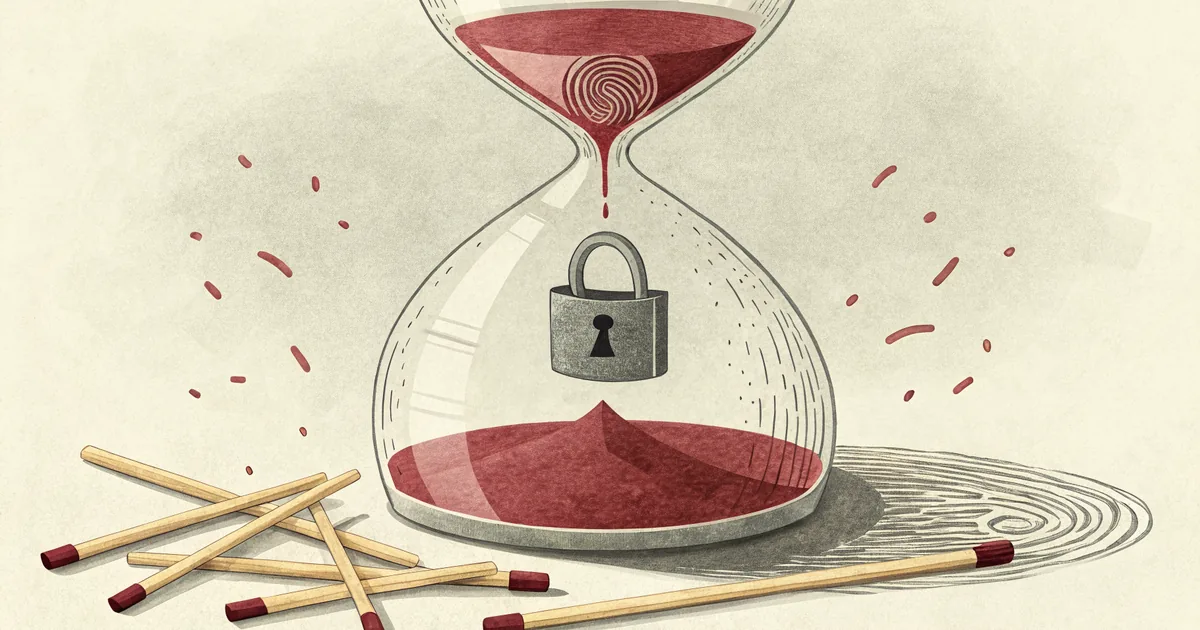
The platform that once printed 1,000 paid subs a day from a single account is now a biometric checkpoint with a 95% failure rate—here's the full autopsy.
Updated Jun 2026 · sourced from 15 YouTube creators and 7 operator groups
Key takeaways
- US Tinder traffic is functionally dead: 1k adds yields 5–20 subs versus ~80 a year ago.
- FaceTec biometric verification blocks US account creation; EU creation still works.
- Geelark suffered a mass ban wave hitting even week-old accounts in May 2026.
- TCP import triggers face-verification on previously healthy phone accounts.
- Male-model EU account creation and subreddit-link funnels are the remaining viable plays.
The Number That Should Stop You Cold
One thousand matches. Five to twenty subscribers.
That is the current Tinder yield operators are reporting across multiple groups as of early-to-mid 2026. Twelve months ago the same workflow produced roughly eighty. (Hunter Ezra OFM, Jan 2026) (Hunter Ezra OFM, Jan 2026)
The collapse is not subtle and it is not a bad week.
For context on how far this has fallen: at peak, a single well-run Tinder account could push 200–1,000 paid subscribers per day with minimal manual input. (Hunter Ezra OFM, Jan 2026) TDM invested tens to hundreds of thousands of dollars in phone farms, staff, and API bots to run this at scale. (TDM Business (OFM), Dec 2025)
That era is over. The question now is whether anything salvageable remains—and the honest answer is: a little, for a specific operator profile.
The FaceTec Wall: What It Actually Does
Since around December 2025, operators across two separate groups have reported mandatory live face-check verification rolling out across all US Tinder regions. Tinder reportedly paid $600k for the FaceTec implementation, which checks biometric consistency across approximately 100 video frames—making it roughly 95% impossible to spoof, according to chatter from early 2026.
This is not a login CAPTCHA. It is a liveness-detection system tied to a biometric hash.
The hash problem is the real killer. Once a face is verified, FaceTec stores that hash—so one real face can only verify a handful of accounts before the system flags the pattern, per operator reports from April 2026.
You cannot just run one cooperative model's face across a hundred accounts.
Where operators disagree sharply on bypass:
- One group (February 2026) stated flatly that FaceTec cannot be bypassed and that anyone selling an $80k device-fingerprint tweak is running a scam.
- A different operator from the same group (April 2026) claimed the opposite—that faceswap via a YouTube method works, and that someone even verified using a plastic figure's face.
These two positions are irreconcilable. Both come from the same community.
Treat any bypass claim as unverified until corroborated by multiple independent operators with receipts. The safe operating assumption remains: US verification cannot be reliably bypassed at scale.
The Geelark Ban Wave
Geelark—the cloud-phone platform many operators moved to after physical phone farms got expensive—took a direct hit. A mass ban wave struck all Tinder accounts running on Geelark in May 2026, including accounts created just one week prior, according to reports from one operator group.
This follows an earlier pattern: even before the wave, Tinder accounts on Geelark were reportedly achieving only a ~10% success rate and shadowbanning shortly after creation, with the same dynamic hitting male accounts. That data is from December 2025.
One group noted in April 2026 that Tinder is stable with no late shadowbans if you use a good API and avoid weak panels—specifically calling out Flame as an example of what not to use. So the picture is not uniformly apocalyptic.
But Geelark specifically appears compromised as of writing.
TCP Import: The Face-Verification Trap
Here is a specific, nasty wrinkle for operators running Tinder Control Panel (TCP). Multiple operators in May 2026 flagged that accounts which were healthy and stable on physical phones got hit with face verification after being imported into TCP.
The account survives on hardware. Import it into the panel—suddenly it needs biometric confirmation.
Separately, the tactic of remotely verifying models' Tinder accounts daily is reportedly no longer viable in 2026, per operator chatter from the same period.
TCP's Android vs. iOS stability is a related friction point. (habibi, Sep 2024) Vetted guidance from mid-2024 (now over a year old, treat accordingly) recommended iOS—specifically iPhone X or newer—for the highest trust rating on dating app automation, warning against older models like iPhone 6/7.
Whether that iOS advantage persists post-FaceTec rollout is an open question the current evidence does not resolve.
The Late Shadowban Mechanic
Even accounts that survive creation face another kill switch. Operators from one group (March 2026) identified a specific failure mode: accounts die one to three hours after export during AI chatting—not because of an API issue, but because of a delayed shadowban.
The account looks alive. Matches are appearing.
Chatting starts. Then roughly an hour in, the account is functionally invisible—no new matches surface, outbound messages go unread.
The shadowban fires on a delay, not at creation.
This matters because it means short-term account health metrics are unreliable. An account that looks good at hour one may be dead by hour three.
The Geo-Lock That Made It Valuable—and Now Painful
Tinder's traffic was always hyper-local. Operators consistently noted that roughly 99% of traffic comes from the city where the account was created. (Damir Nurzhanov, Mar 2024)
That geo-precision is what made it valuable—you could target New York, LA, or London specifically.
It also means US verification doesn't just raise friction; it cuts off US account creation almost entirely. EU creation still works, per operator reports from April 2026.
That is the primary remaining on-ramp.
What the Desensitization Problem Adds
Even setting aside the technical barriers, the audience itself has changed. Approximately 1 in 3 profiles on Tinder/Bumble are now perceived as OnlyFans promotions, per analysis from mid-2025. (TDM Business (OFM), Jul 2025)
Users who have been burned by the funnel once simply do not convert. (TDM Business (OFM), Jul 2025) Dating app traffic already produced higher churn and lower LTV than other channels because subscribers arrive knowing they're being funneled. (TDM Business (OFM), Jul 2025)
The platform's defenses arrived on top of an already-degrading audience quality.
Dating apps were highly effective in 2022; by 2025 the ROI had deteriorated substantially and risk had increased. (TDM Business (OFM), Jul 2025)
Where Tinder Still Makes Sense
Narrow but real:
EU account creation. US verification doesn't apply. Operators creating accounts on European IPs and targeting European cities report this lane is still functional as of April 2026.
The audience quality and geo-targeting precision remain Tinder's genuine strengths when you can actually get accounts live.
Male-model funnels. The face-verification problem is less acute when you have a real, cooperative male model who can pass liveness detection legitimately. The pool of operators who can run this is small, but the funnel economics—higher subscription price support from dating-app traffic (Damir Nurzhanov, Mar 2024)—still hold when it works.
Subreddit link in bio. Placing a subreddit reference (r/subredditname) in a Tinder profile instead of a direct social or OF link avoids the bio-string detection that kills most accounts. (Bjorn Olsen, Jan 2026) Direct OF links and Instagram handles get flagged; a subreddit flies under the radar.
Pair this with the emoji-swap trick—replacing @ with an unrelated emoji to avoid automated detection. (Bjorn Olsen, Jun 2024)
Workplace field as a covert funnel. Placing a Snapchat handle in the Workplace field rather than the bio sidesteps bio-scanning entirely. (Bjorn Olsen, Jun 2024) These evasion tactics are not new—some date to mid-2024—but they remain the least-patched options operators report.
Cost Reality Check
Scaling Tinder has always been expensive—boosts, devices, verifications, proxies—and most operators spend more than they make unless their setup is extremely dialed in, per one group's assessment from late 2025. Tinder-sourced snaps cost $8–15 each and get banned frequently; running them requires Cupid (per-conversation billing) or trained chatters plus servers and VAs, per chatter from the same period.
Add FaceTec bypass attempts—many of which are outright scams—and the cost-per-subscriber math breaks down fast for anyone without an already-functional, low-cost infrastructure.
The Operator Disagreement You Need to See
This space has two genuinely conflicting operator camps right now:
Camp A (effectively dead, pivot away): Multiple vetted creators who previously ran Tinder at scale have explicitly walked away. (Patryk, Mar 2026) (TDM Business (OFM), Dec 2025) (TDM Business (OFM), Jul 2025) The argument is that organic social (Instagram, X) offers better risk-adjusted returns, that dating-app users are desensitized, and that the technical overhead now exceeds realistic ROI for most operators.
Camp B (still viable with right setup): Some operators maintain that Tinder is stable in April 2026 with a good API, that EU creation works, and that the geo-targeting precision justifies continued investment for operators who know what they're doing.
Both positions have real evidence behind them. The resolution probably depends on operator technical capability, geography, and whether you have access to real human models for verification.
For most operators reading this, Camp A is the more applicable reality.
The Bottom Line
Tinder's US traffic is not declining—it has structurally collapsed. The FaceTec wall, the Geelark ban wave, the TCP import trap, and the late shadowban mechanic have collectively removed the conditions that made it an S-tier channel. (Hunter Ezra OFM, Jan 2026)
What remains is a narrow EU play and some evasion tactics with limited shelf lives.
If you are currently allocating meaningful time or capital to US Tinder in 2026, the evidence weight says you are subsidizing Tinder's security budget. Redirect that resource.
Reddit and aged Twitter/X remain the most consistently cited stable organic base by multiple operator groups as of early 2026. The Tinder chapter isn't closed—but right now it reads like a footnote.
Sources
On the record (YouTube creators):
- TDM Business (OFM) — 2025 Dating App Sauce for OFM in 5 Minutes, Jul 2025. Watch ↗
- Bjorn Olsen — How I Funnel Reddit Traffic to Fanvue with a HIGH CONVERSION rate (AI OFM), Jan 2026. Watch ↗
- Bjorn Olsen — Onlyfans Traffic: Secrets To Funnelling with Dating Apps MUST WATCH**, Jun 2024. Watch ↗
- Damir Nurzhanov — How to set up your OnlyFans Profile - Higher Conversion Rate, Mar 2024. Watch ↗
- Patryk — OFM Marketing Tier List (2026), Mar 2026. Watch ↗
- TDM Business (OFM) — The Ultimate Social Media Tier List for OFM 2025, Dec 2025. Watch ↗
- habibi — Onlyfans management Ask me anything (leaked call), Sep 2024. Watch ↗
- Hunter Ezra OFM — ofm marketing legacy tier list, Jan 2026. Watch ↗
Community intelligence: 57 operator claims aggregated from 7 separate private OFM groups (Dec 2025–May 2026), corroboration counted across groups. Group identities are withheld to protect sources; browse the underlying intel in the Community Intel Wiki.